Blog
| Subject | |
|---|---|
|
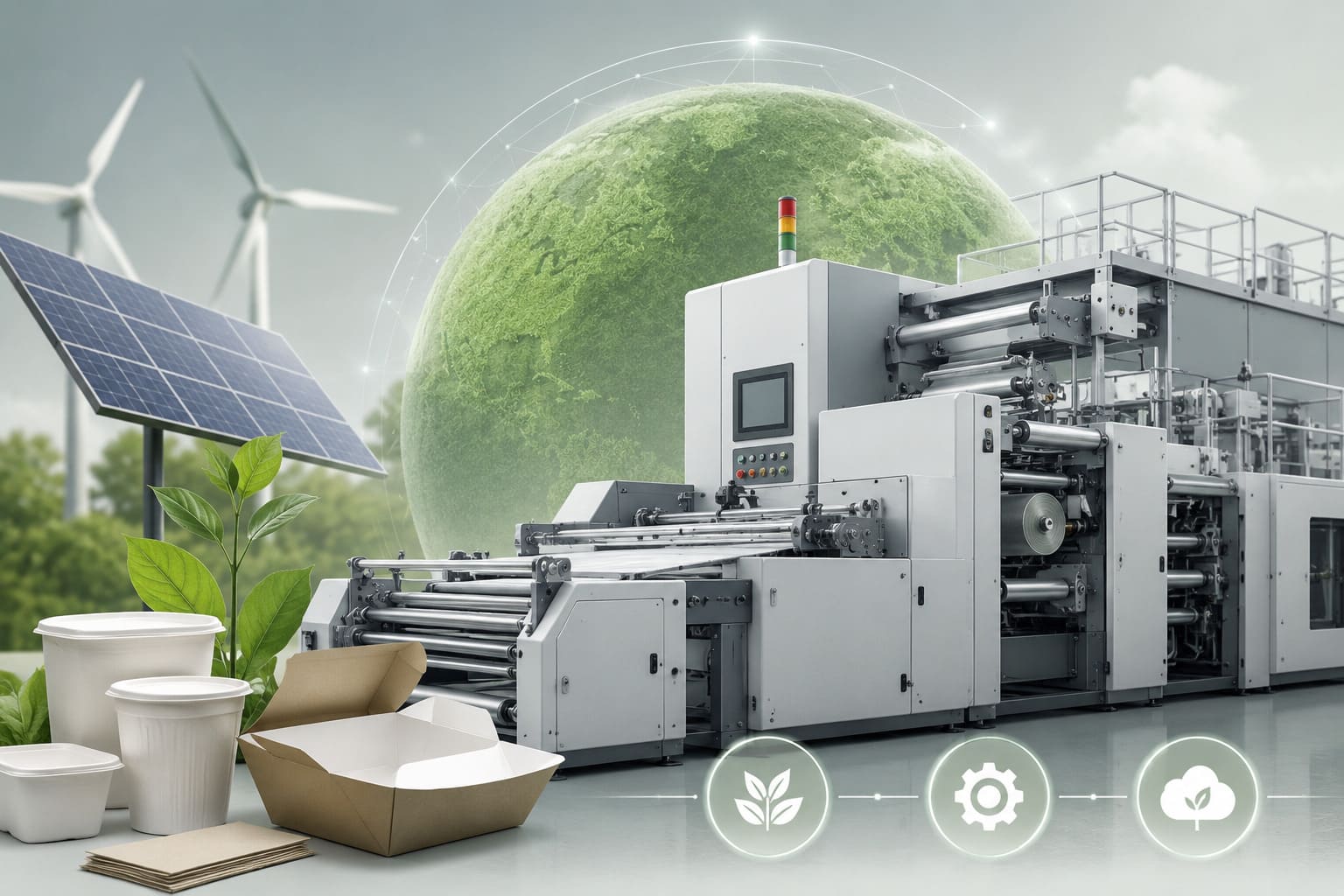
ISO 14064-1 manufacturing data requests are showing up in supplier onboarding forms that never used to ask for them. If a European buyer's procurement or sustainability team has recently asked your paper food box production line for "Scope 1 and 2 data" or a "carbon data pack," you are not being singled out — you are seeing the practical downstream effect of the EU's Corporate Sustainability Reporting Directive (CSRD) reaching into supply chains that were never directly regulated themselves. |
 |
|
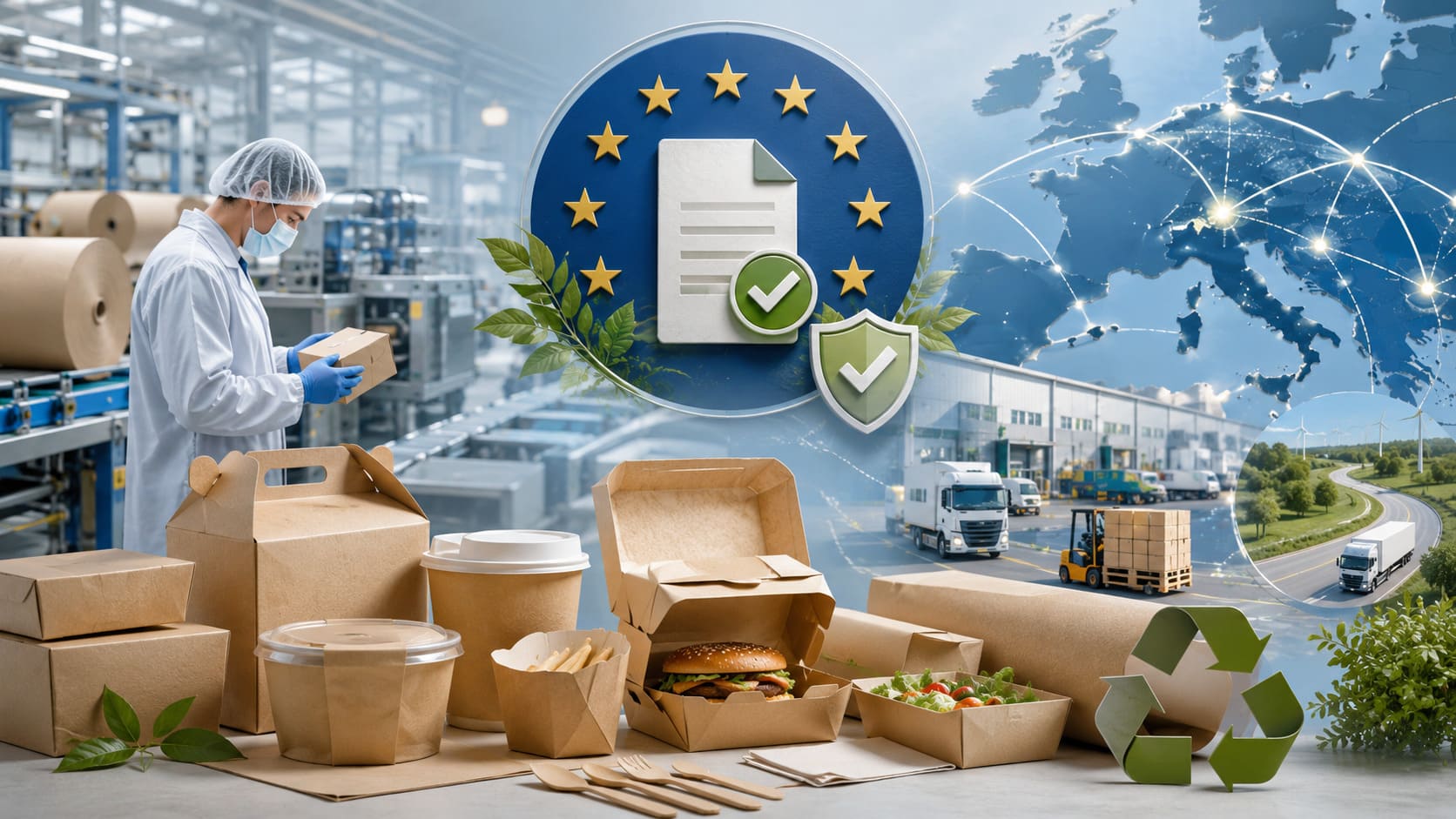
Paper food box making machine EU compliance is no longer a side conversation for exporters — it is now a purchasing condition. From 12 August 2026, the EU's revised Packaging and Packaging Waste Regulation (PPWR) moves from "future rule" to "core obligation," and paper-based food packaging is inside its scope, not exempt from it. If you manufacture paper lunch boxes, hamburger boxes, fresh boxes, or paper bowls and plates for the European market — or you supply a converter who does — this is the point where compliance planning turns into compliance documentation. |
 |
|
 |
|
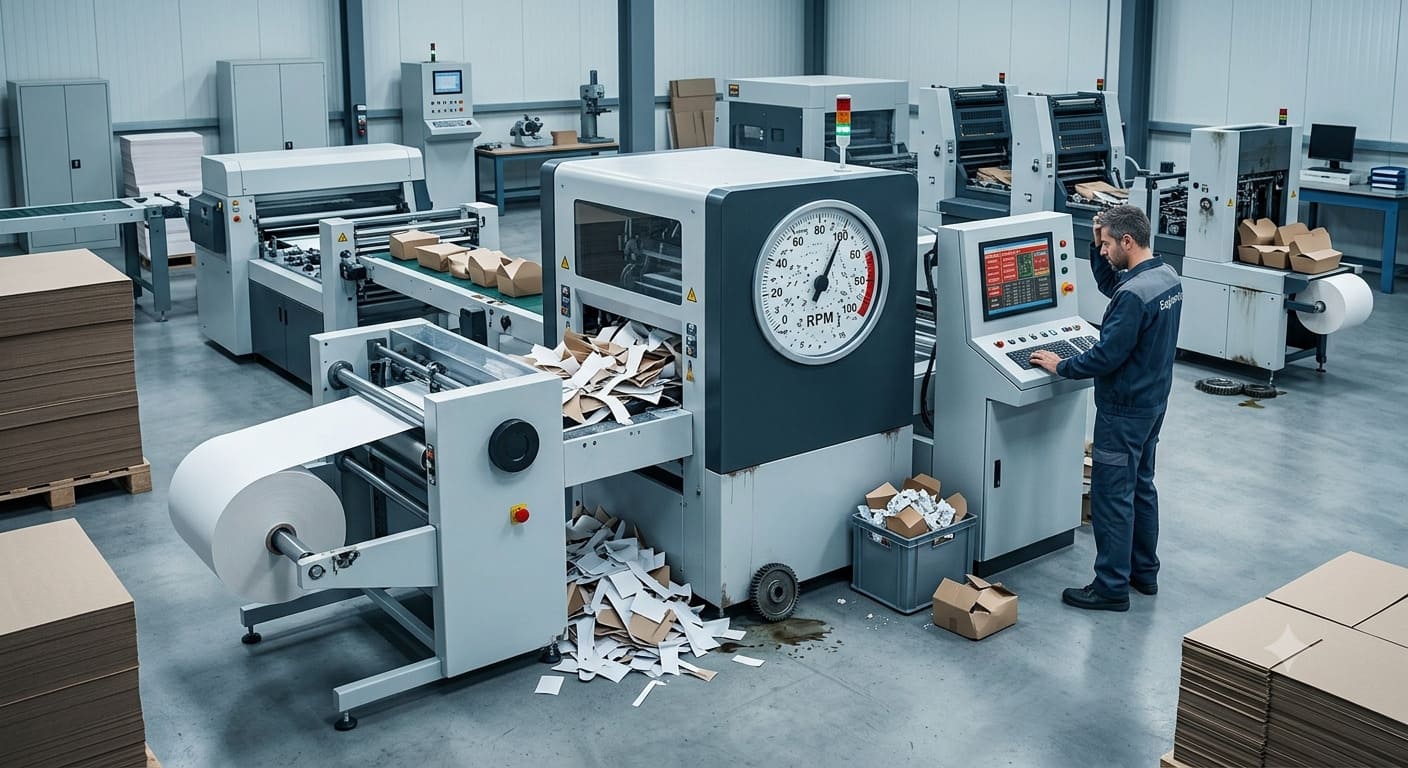
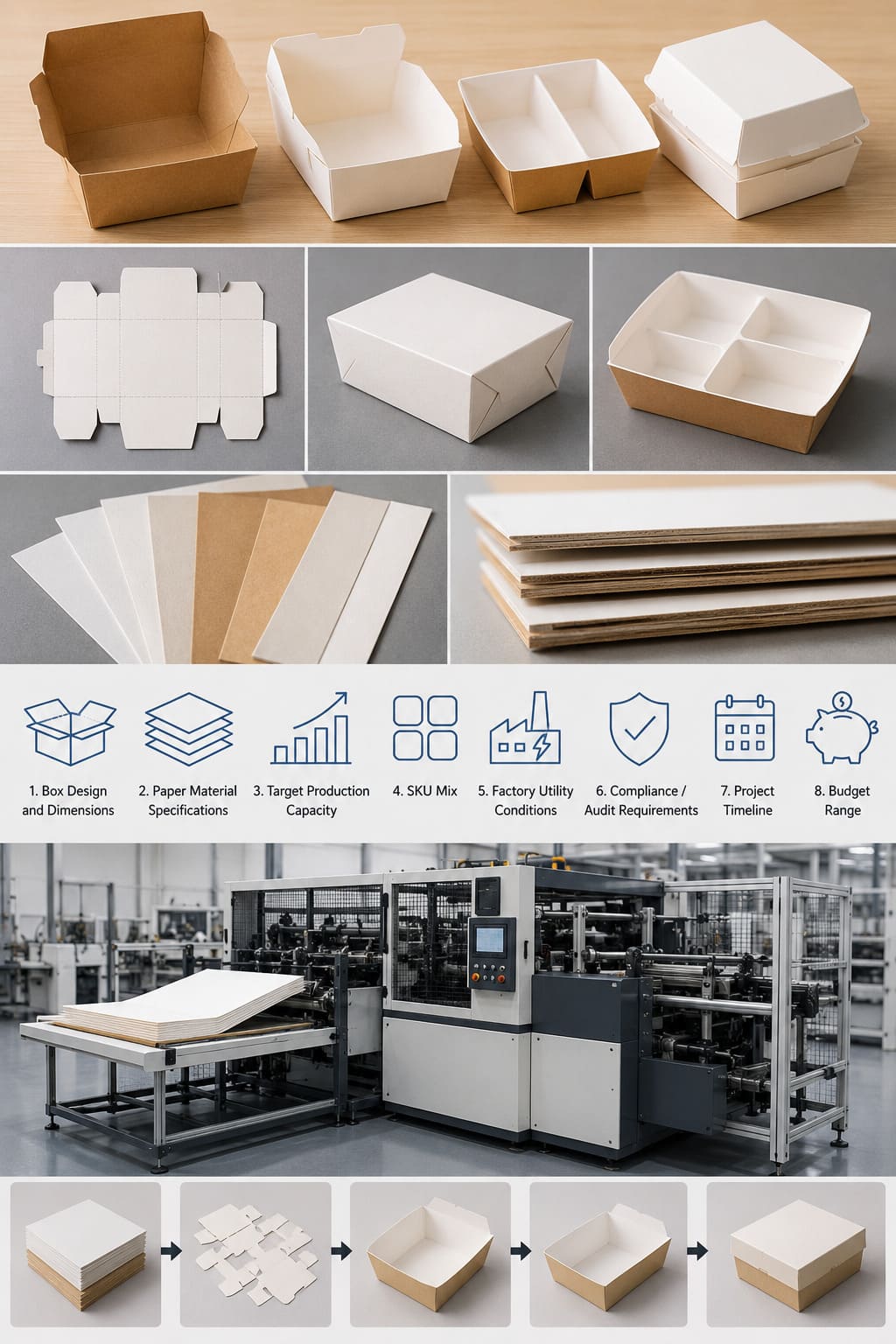
A complete RFQ for a paper food box making machine should include at least eight key items: box drawings or physical samples, paper material specifications, target production capacity by SKU, SKU mix, factory utility conditions, compliance or end-customer audit requirements, project timeline, and budget range. |
 |
|
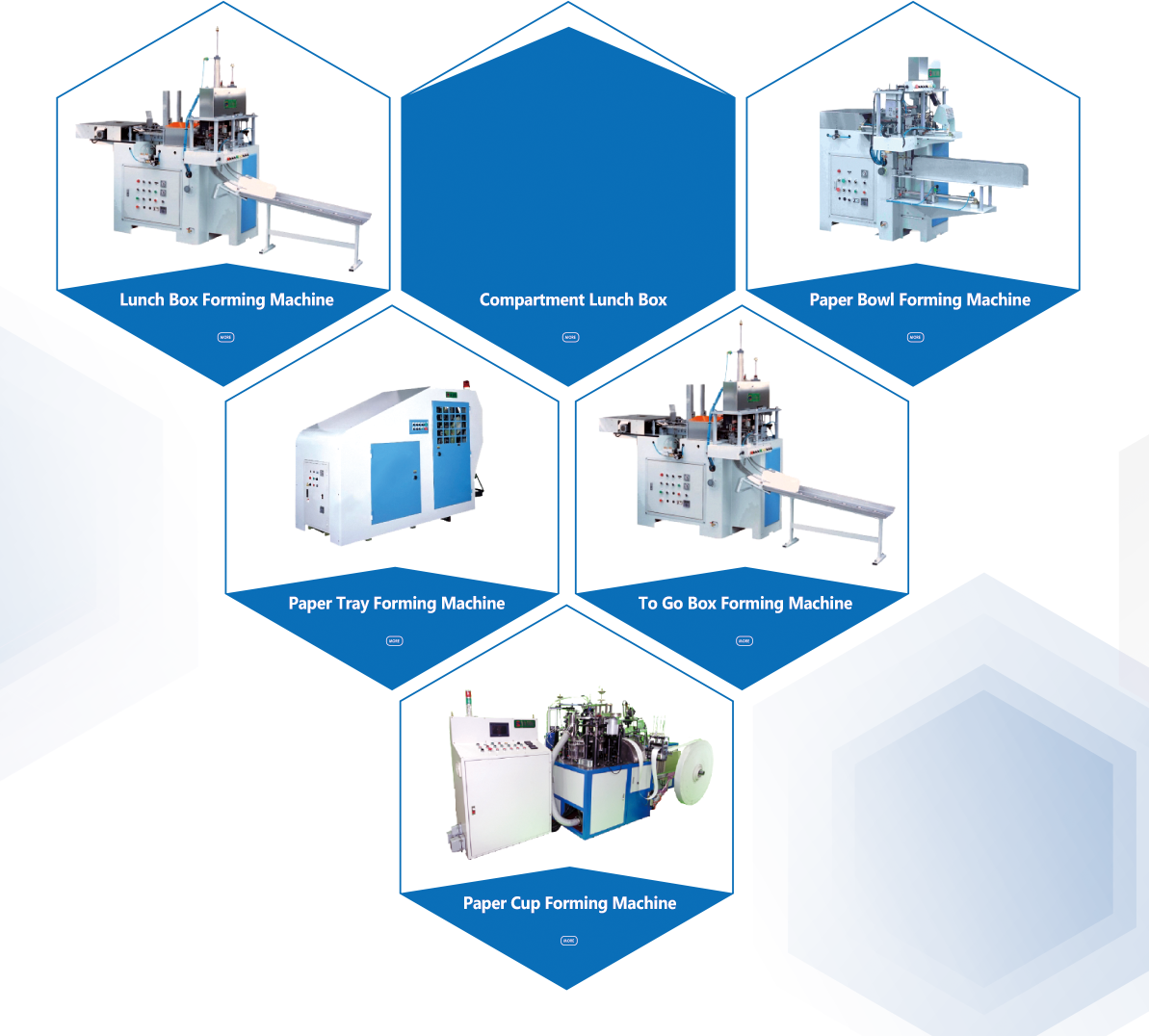
Interpack, held once every three years, will return to Düsseldorf, Germany from May 7–13, 2026. As one of the world’s most influential trade shows for the packaging and processing industries, Interpack 2026 will be far more than a showcase of new machines. For paper food box manufacturers and international buyers, this edition marks a turning point: Europe’s packaging compliance clock is already ticking. |
 |
|
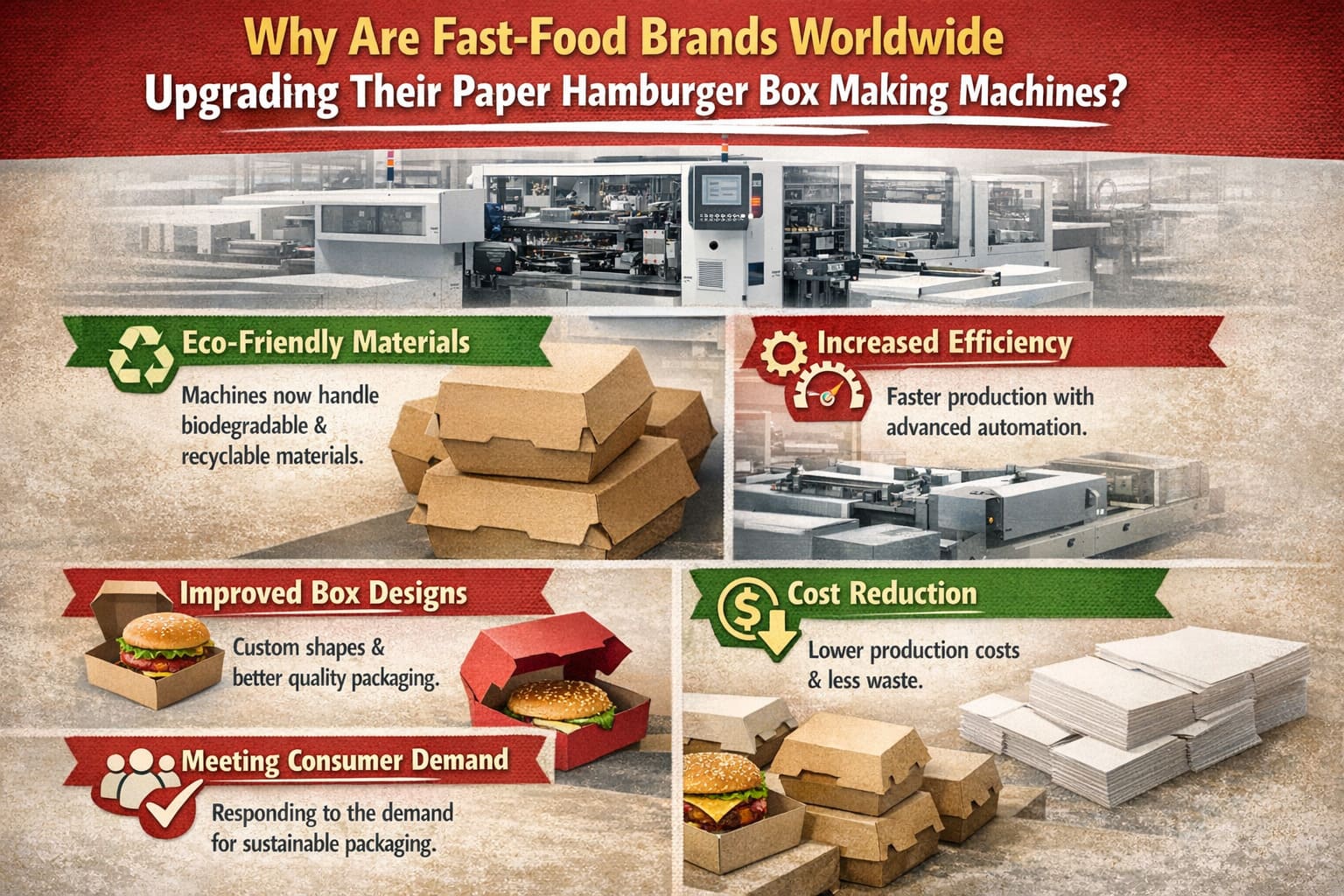
The global fast-food industry is at an inflection point. Regulatory pressures, consumer demand, and profit margins all point in one direction: paper-based packaging has become non-negotiable. But here is what most procurement managers do not realize: your packaging machine investment today will determine your competitiveness for the next decade. |
 |
|
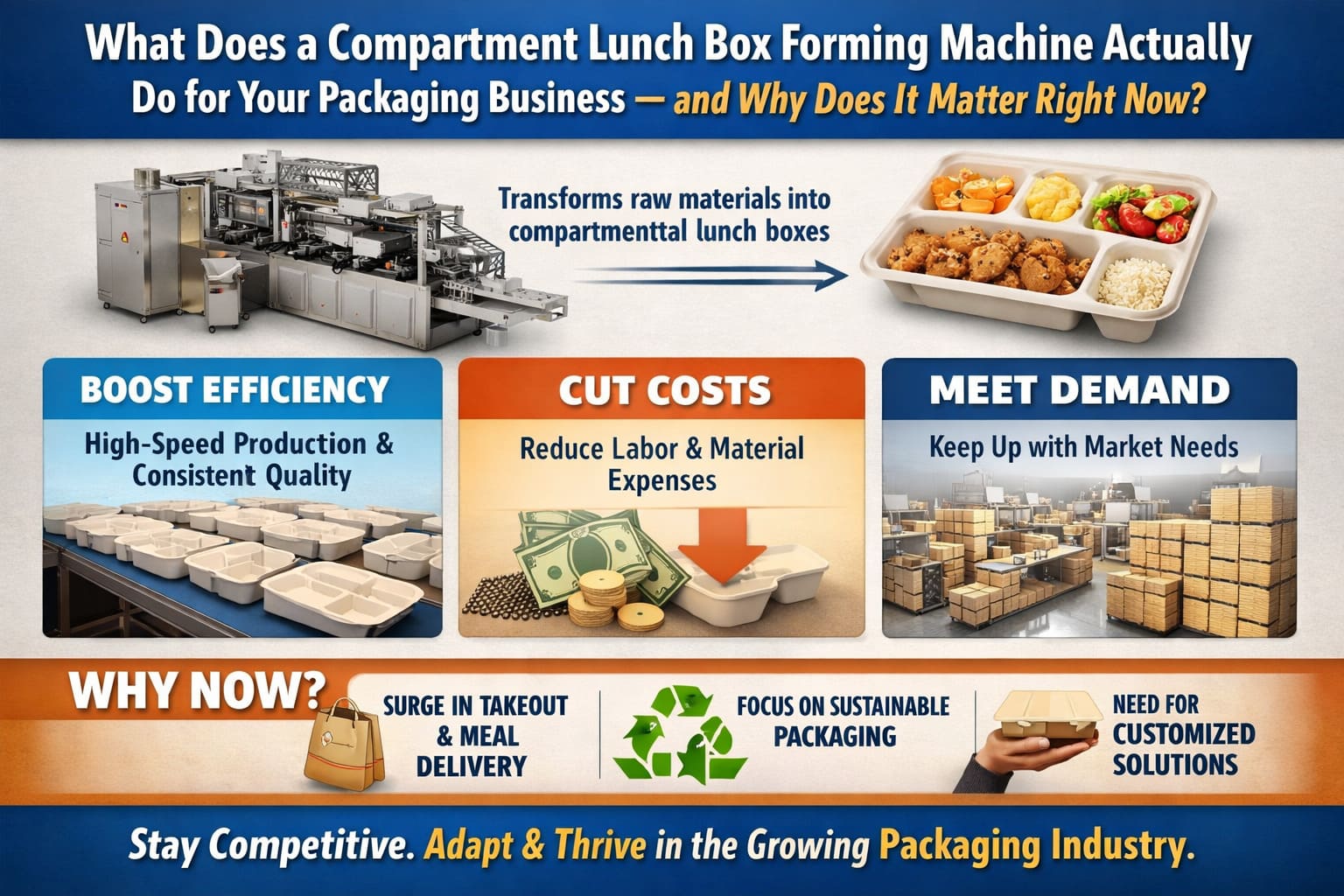
The global shift away from single-use plastics is accelerating faster than most packaging executives anticipated. The EU's Single-Use Plastics Directive, Japan's Plastic Resource Circulation Act, and similar laws across Southeast Asia, India, and Latin America have collectively created an irreversible turning point: food packaging brands and contract manufacturers who relied on polystyrene compartment trays are now scrambling to find paper-based alternatives that can match the performance, production speed, and cost economics of their old lines. |
 |
|
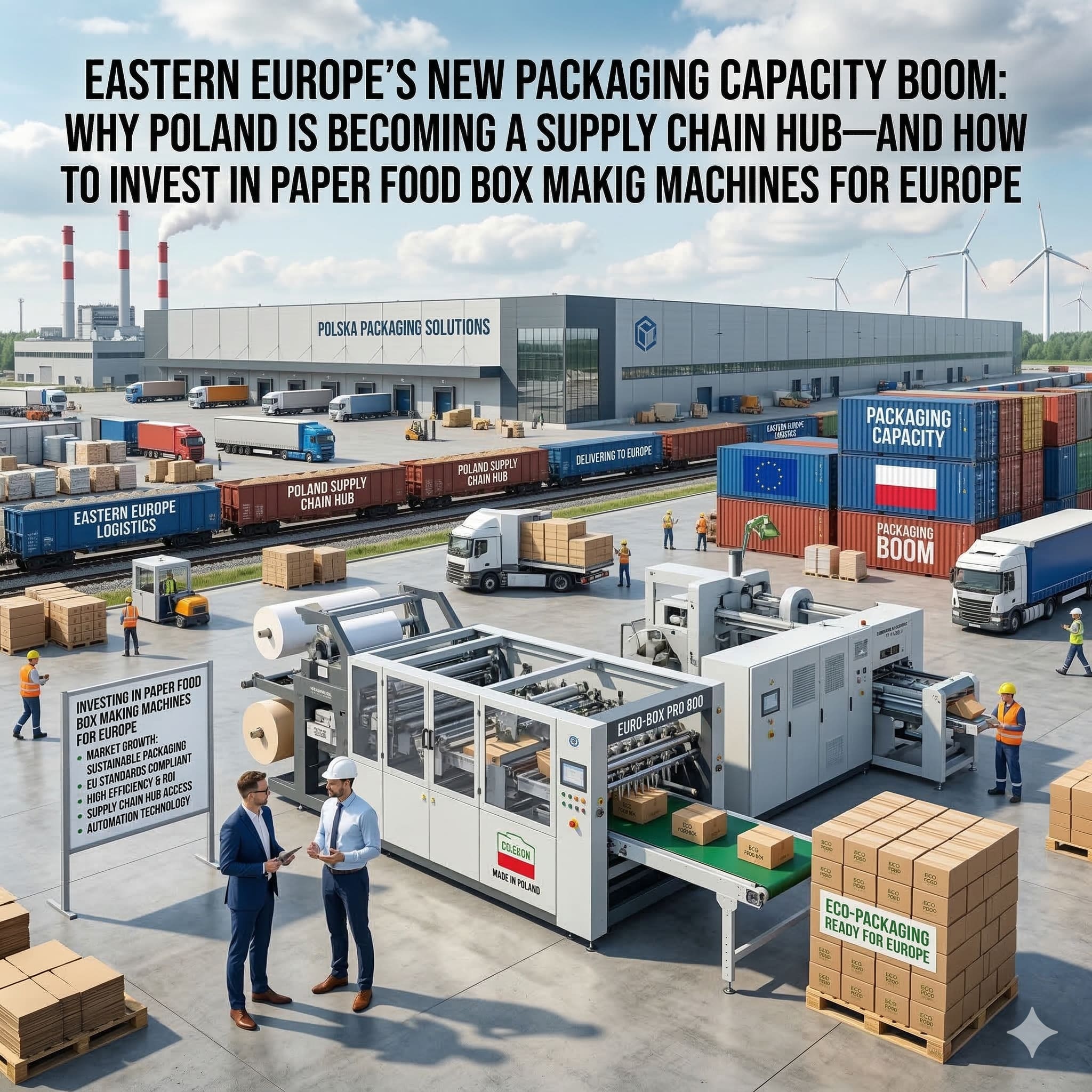
When global manufacturers talk about their next capacity strategy, Poland is no longer viewed as merely a low-cost extension of Western Europe. In 2025, Poland has become a critical hub for packaging producers, food container converters, and brand-side supply chain planners across Europe. For investors evaluating Paper Food Box Making Machine Europe solutions, understanding this shift is essential. |
 |
|
In the global shift toward sustainability, the food packaging industry is undergoing its most significant transformation in decades. As a pioneer with over 35 years of expertise, Win Shine understands that moving from plastic to paper is not just a material swap—it is a complete recalibration of your supply chain, production efficiency, and regulatory compliance. If you are standing at the crossroads of this transition, this "3-Table Decision Model" will help you mo |
 |
|
If you still view "Sustainable Packaging" as a mere material swap in January 2026, you are missing the tectonic shift in the market. Global brands and distributors are no longer just choosing between paper and plastic; they are auditing "The Certainty of Deliverability." In 2026, going plastic-free is no longer a marketing slogan—it is a mandatory clause in procurement contracts. What is truly expensive today isn't the raw pulp; it’s the uncertainty of your production line. As a Taiwan-based leader with 35 years of expertise, Win Shine has witnessed this evolution. Today, we discuss how a high-performance Paper Food Box Making Machine transforms your factory into a "Trusted Supply Chain Hub" for Tier-1 global clients. |
.png "2026 Outlook: Why \\\\\\\\"Deliverability\\\\\\\\" is the New Repricing Standard for Global Packaging Supply Chains") |
|
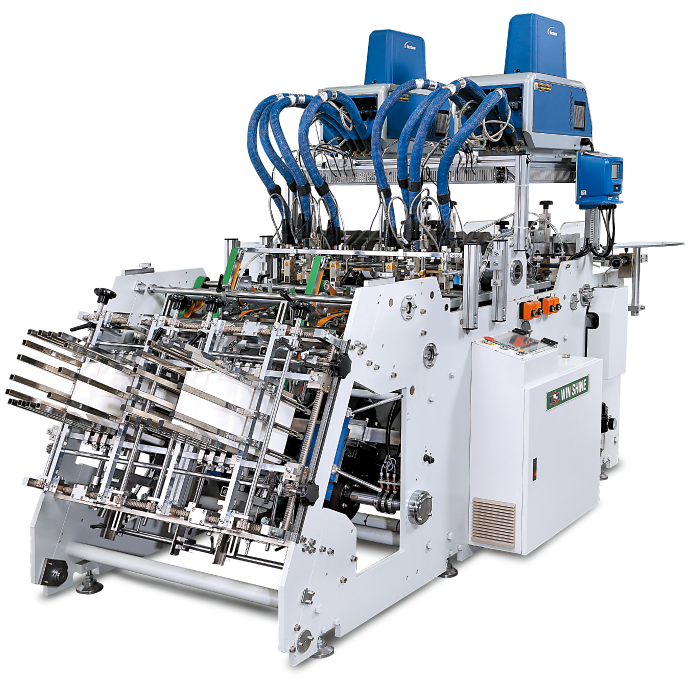
If you view a "paper food box machine" simply as a device that folds paper, you are liable to fall into the price-war trap in 2025. However, if you view it as a "production engine for a compliant supply chain," you will understand this: After 2025, buyers are not just purchasing a Paper Food Box Making Machine; they are acquiring a system that transforms "regulatory risk" into "controllable cost." |
 |
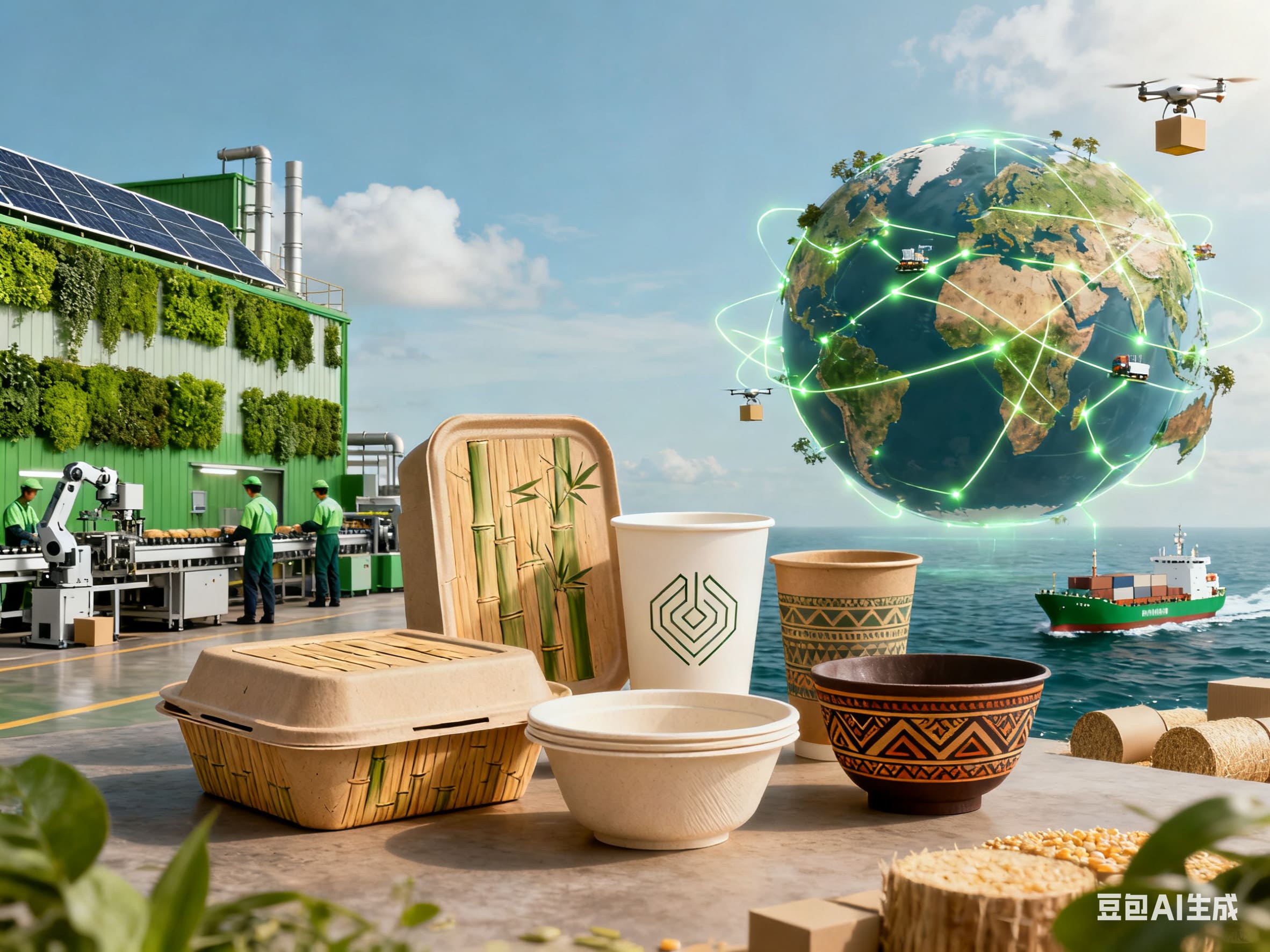
When “Disposable” No Longer Means “Convenient”In this sweeping transformation, paper lunch boxes, bowls, and cups are moving from supporting roles to the main characters of the green economy. At the heart of this shift lies a silent protagonist: the paper food box making machine—the manufacturing technology that is quietly shaping the next decade of global packaging. |
 |