
Sustainable Packaging Revolution: The Global Shift of Paper Food Boxes, Bowls, and Cups in 2025
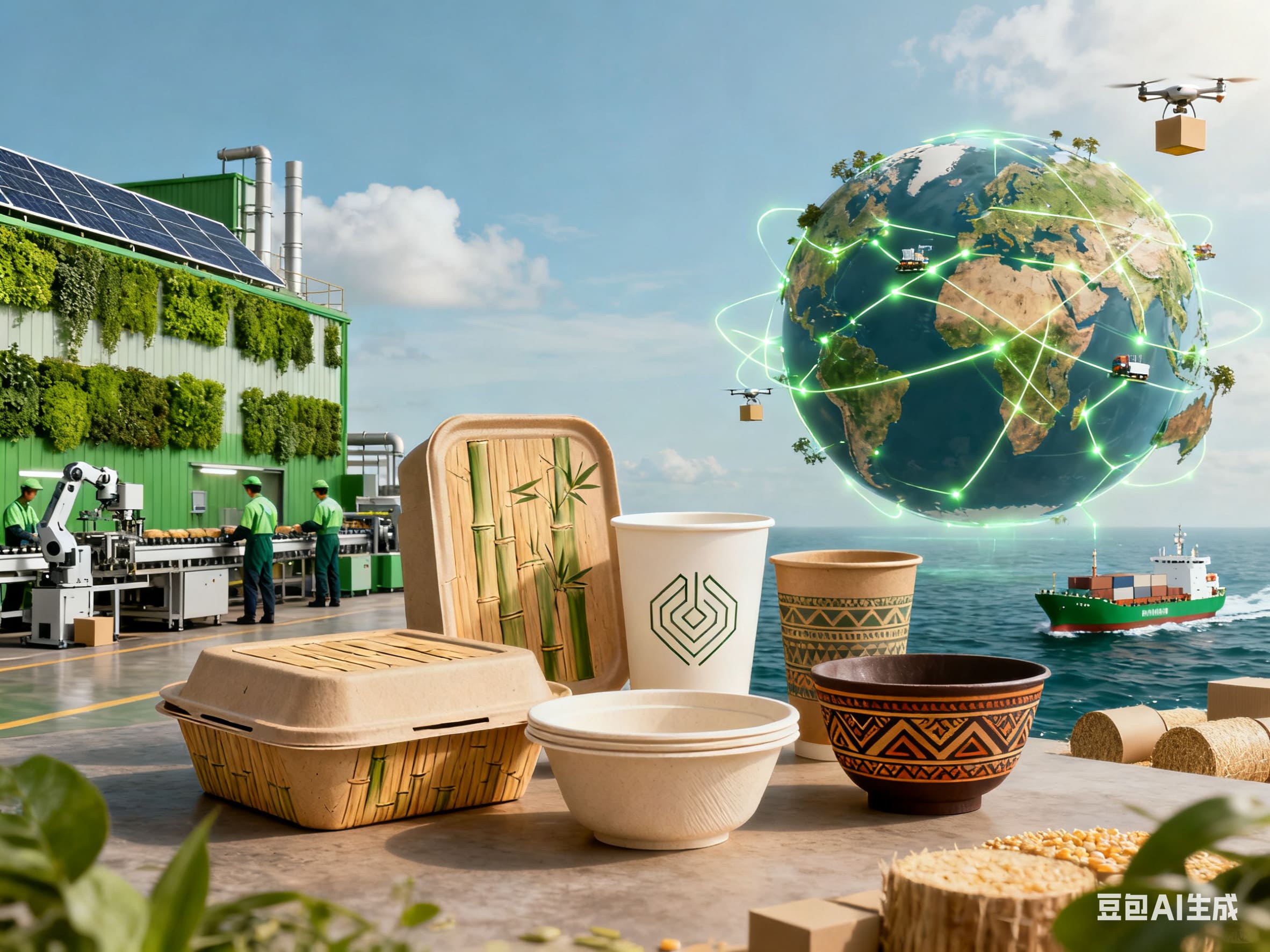
Introduction: When “Disposable” No Longer Means “Convenient”
Twenty years ago, “disposable” symbolized convenience, efficiency, and modern living. But in 2025, that word has been entirely redefined. Today, it stands for waste, hidden social costs, reputational risks for companies, and the vulnerability of global supply chains.
The world is entering an unprecedented sustainable packaging revolution. This is not a slow evolution—it’s a structural realignment. From Parisian cafés to Los Angeles fast-food chains, from Tokyo convenience stores to Dubai’s luxury hotels, businesses and consumers alike are redefining the true value and economics of packaging.
In this sweeping transformation, paper lunch boxes, bowls, and cups are moving from supporting roles to the main characters of the green economy. At the heart of this shift lies a silent protagonist: the paper food box making machine—the manufacturing technology that is quietly shaping the next decade of global packaging.
Chapter 1 — The Rules Have Been Rewritten: Policy and Consumer-Driven Sustainability
When the European Commission finalized its Plastic Reduction Act, and states like California and New York passed single-use packaging bans, the era of “choice” in packaging came to an end—replaced by non-negotiable legal obligations.
This revolution is powered by two engines: top-down regulation and bottom-up consumer awakening.
Policy: Non-Negotiable Global Standards
- Europe: As the world’s regulatory benchmark, the EU will enforce strict bans on non-recyclable plastics after 2025. The Extended Producer Responsibility (EPR) framework—essentially a “plastic tax”—will drastically increase the cost of plastic usage, forcing brands to pivot toward paper-based alternatives.
- United States: Over a dozen key states (including California, New York, and Washington) have mandated that take-out packaging be paper-based or compostable. For nationwide chains, this patchwork of state laws is a logistical nightmare, pushing them toward a single, compliant solution: paper as the national standard.
- Asia: Japan, Korea, and Taiwan are implementing zero-plastic and carbon audit systems. Packaging’s carbon footprint is now part of corporate emission accounting—directly linked to green financing and government incentives.
Consumer Power: Values Are the New Currency
Consumers—especially Gen Z and the rising Alpha generation—buy differently. They don’t just seek product utility but transparency and authenticity.
For them, “eco-friendly” isn’t a marketing plus—it’s a baseline expectation. Over 70% of global consumers are willing to pay a premium for sustainable packaging. This is not impulsive—it’s a value vote rewarding brands aligned with their principles.
Industry: From Compliance to Strategy
Global restaurant chains, airlines, and luxury hotels are no longer adopting paper packaging just to comply—they’re strategically investing in it.
In the eyes of investors, ESG (Environmental, Social, and Governance) performance is now central to risk assessment and long-term resilience. Packaging decisions have become one of the most visible and measurable ESG indicators.
This is not an option—it’s a market survival requirement for the next decade.
Chapter 2 — The Technological Breakthrough: From “Paper” to “Smart Manufacturing”
As demand skyrockets, traditional paper packaging—once seen as a simple printing and cutting industry—has evolved into a high-tech fusion of precision engineering, material science, and data intelligence.
The Coating Revolution: The Final Mile Toward Full Sustainability
The next generation of materials—PLA (polylactic acid), biodegradable films, and aqueous coatings—is replacing traditional PE lamination. This innovation solves the long-standing problem of “recyclable but costly to recycle” paper cups.
Now, paper containers are both oil-resistant and water-resistant, while remaining low-cost recyclable and compostable, seamlessly integrating into existing recycling systems.
Smart Production: From Manufacturing to Intelligence
Modern paper food box making machines—such as Win Shine Machinery’s latest models—are no longer simple press machines.
They integrate IoT sensors for real-time monitoring of heat sealing, pressure, and paper tension. These data-driven systems enable predictive maintenance and instant quality assurance, ensuring every food box meets food-grade safety standards while minimizing downtime losses.
Modular Molds & Flexibility: Speed Equals Profit
Innovation must move fast. With today’s modular design, a single machine can produce diverse products—single-compartment, three-compartment, or multilayer boxes—simply by changing molds.
More importantly, mold change speed defines profitability. Fast switching enables businesses to handle small-batch, high-mix orders—reducing capital risk and maximizing market agility.
Automation Integration: Maximizing OEE
Cutting-edge models now integrate automatic stacking, high-speed vision inspection, labeling, and defect rejection at the end of the production line.
This drives Overall Equipment Effectiveness (OEE) to exceed 90%, meeting EU-level benchmarks—translating to maximum ROI and minimal per-unit production cost.
This isn’t just box-making—it’s a convergence of mechanics, materials, and machine intelligence.
Chapter 3 — Global Realignment: How Europe, the U.S., and Asia Are Redefining Packaging
While all three regions share the same sustainability goal, differences in regulation, consumer behavior, and industry structure demand tailored strategies.
| Region | Policy Focus | Industry Traits | Growth Drivers | Win Shine Strategy |
| Europe | Strengthened plastic tax & recycled content mandates | Mature market, regulation-heavy | High-value, high-tech, eco-premium demand | Launch CE-certified models for aqueous coating |
| United States | State-led plastic bans & procurement laws | Take-out economy, chain dominance | Automation, labor-saving, compact design | Introduce full-line automation and smart monitoring |
| Asia | ESG-driven industrial transformation | Large, fast-growing consumer base | High capacity, cost efficiency, low-carbon tech | Promote high-efficiency, low-energy coating equipment |
Global Common Threads
Sustainability = Market Access.
Without sustainable packaging, brands risk exclusion from the EU and major U.S. retail networks.
In-house Production & Regional Supply Chains.
Post-pandemic disruptions revealed that controlling packaging is as vital as controlling ingredients.
Internalizing packaging production is now the smartest strategy for resilience and profit retention.
Chapter 4 — From Manufacturing to Branding: Machinery as the Engine of Sustainable Growth
With nearly 35 years of experience, Win Shine Machinery has witnessed the transition from plastic molding to the paper packaging revolution.
This journey reveals a profound insight: machinery is no longer a mere production tool—it’s a strategic pillar of ESG transformation.
- Investing in your own machines isn’t just cost-saving—it’s strategic decoupling, cutting carbon from logistics and insulating against freight volatility.
- Adopting smart manufacturing isn’t just efficiency—it’s precision management, optimizing energy use and material yield for transparent carbon audits.
- Using paper-based materials isn’t just compliance—it’s powerful communication.
A well-designed paper box conveys environmental commitment and strengthens brand storytelling at the consumer’s first touchpoint.
These decisions reshape not only cost structures but also brand equity and long-term competitiveness.
Key Industry Data: The 2025 Global Paper Packaging Snapshot
| Item | 2025 Projection | Growth Driver | Trend Keyword |
| Paper Lunch Box Market | USD 12.6 Billion | Plastic bans + delivery boom | Plastic-Free |
| Paper Bowl & Cup Market | CAGR 6.2% (2024–2028) | Coffee chains, ready-meal growth | Compostable |
| Forming Machine Demand | +45% YoY | Labor shortage + ESG investment | Automation |
| Plastic-Free Coated Paper Adoption | >65% penetration | EU legislation | Water-Based Coating |
| Smart Monitoring Implementation | 40% (factory-level) | Industry 4.0 & digitalization | Smart Manufacturing |
FAQs for Business Decision-Makers
Q1. Why is the paper food box market booming in 2025?
A1. The perfect storm of plastic bans, ESG pressure, retailer mandates, and explosive food delivery growth has made this surge inevitable.
Q2. What’s the ROI period for a paper food box making machine?
A2. Typically 18–24 months depending on product type and output. With plastic taxes and automation efficiency, ROI is shortening rapidly—often reducing external packaging costs by 30–40%.
Q3. What eco-materials can Win Shine machines handle?
A3. Our machines support PE, PET, and the latest aqueous coating papers—offering superior recyclability and resistance, already a preferred solution in Europe.
Q4. Is Asia lagging behind in sustainability?
A4. Not anymore. China, Japan, Korea, and Taiwan are all pushing strong zero-plastic initiatives. With huge populations and advanced delivery ecosystems, Asia is emerging as the world’s largest and most innovative paper packaging market.
Q5. Will automation replace human labor?
A5. Not replace—empower. Automation frees human talent from repetitive tasks, allowing focus on quality, R&D, and system optimization.
Q6. What’s Win Shine’s R&D focus for the future?
A6. Smart + Sustainable: AI-driven vision inspection, ultra-efficient heat sealing, energy recovery integration, and high-speed forming for 100% plastic-free substrates.
Conclusion: The Turning Point from “Disposable” to “Sustainable”
The year 2025 marks not just a turning point for paper food packaging—it’s a paradigm shift for global manufacturing and branding.
This revolution redefines cost, revealing that environmental and social costs always circle back to financial statements.
For global food brands and manufacturers, the paper food box making machine is no longer just equipment—
It’s the bridge to a sustainable future, the key asset enabling long-term profitability and consumer trust in the new era.